
Crowd Protection at City Events: Why Crash-Rated Portable Barriers Matter
Article Summary
Parades, festivals, markets, protests—municipal events put large numbers of people on streets that were designed for cars. Standard crowd-control barricades manage people, but they are not built or tested to stop vehicles. Crash-rated portable barriers add a proven layer of protection at the vehicle approach points that matter most.
From Crowd Control to Crowd Protection
If you walk your event route before the gates open, you’ll see the same tools in most cities:
- Interlocking metal crowd-control barricades
- Plastic water-filled barriers
- Temporary fencing and cones
All of these help with crowd control. They keep pedestrians in the right place and vehicles in the right lanes. They’re familiar, quick to deploy, and already sitting in your yards and warehouses.
What they can’t do, reliably, is stop a car or truck that enters a pedestrian area at speed. In several widely reported vehicle-ramming incidents, these types of devices have been pushed aside, crushed, or simply driven over.
That’s the gap between managing people and protecting people from vehicles. Crowd protection asks different questions:
- Where could a driver, accidental or intentional, build speed toward your crowds?
- How far into your event footprint could a vehicle reach?
- What physical measures are proven in testing, not just assumed, to stop or slow that vehicle?
Answering those questions means looking beyond cones and lightweight barricades.
Why Vehicle Threats Now Shape Event Planning
CISA’s Vehicle Incident Prevention and Mitigation Security Guide puts vehicle risk front and center for mass gatherings. It urges planners to map vehicle approaches, limit access to pedestrian zones, and consider physical barrier systems that match the likely vehicle weight and speed.
You can download the guide directly from CISA here.
- Streets are often straight, wide, and built to move traffic quickly.
- Crowds cluster at predictable points: stage fronts, grandstands, food courts.
- You may already be closing the same blocks several times a year.
The risk isn’t theoretical. News coverage over the last decade has shown incidents at holiday markets, parades, and entertainment districts where vehicles crossed into crowded sidewalks.
Communities now expect city leaders to show that risk has been considered and that more than paint and cones separate vehicles from pedestrians.
What Crash-Tested Vehicle Protection Adds

Crash-tested systems—whether you call them vehicle barricades, barriers, or portable bollard arrays—are designed for one thing: managing vehicle energy.
Under standards such as ASTM F2656, products are tested with specific vehicles at defined speeds. The results show whether a system can stop or disable the vehicle, and how far it travels beyond the barrier line (penetration distance).
- A way to match products to your streets and speeds, not someone else’s
- A measurable difference between “should work” and “has been tested to work”
- Equipment you can redeploy from one event to another instead of rebuilding from scratch
For an overview, visit Delta’s portable portfolio as it gives cities a range of tools.
Key options include:
- MP5000 Portable Barrier – towable, rapid-deployment barrier tested to M30/M40 for higher-speed approaches and vehicle checkpoints.
- MP100 Portable Barrier – compact, stackable system with an M30/P3 designation, stopping a 15,000 lb vehicle at 30 mph with just 51 ft of penetration.
- TB100 Portable Bollard System – portable crash-rated bollards, certified M30/P3, that absorb 400,000 foot-pounds of energy per bollard.
- DSC50 “S” Barrier – lightweight, crash-rated barrier designed specifically for temporary crowd protection.
You don’t throw away your metal crowd-control barricades. You add a crash-tested layer where the vehicle threat is highest.
The DSC50 “S” Barrier: Built Around Municipal Events
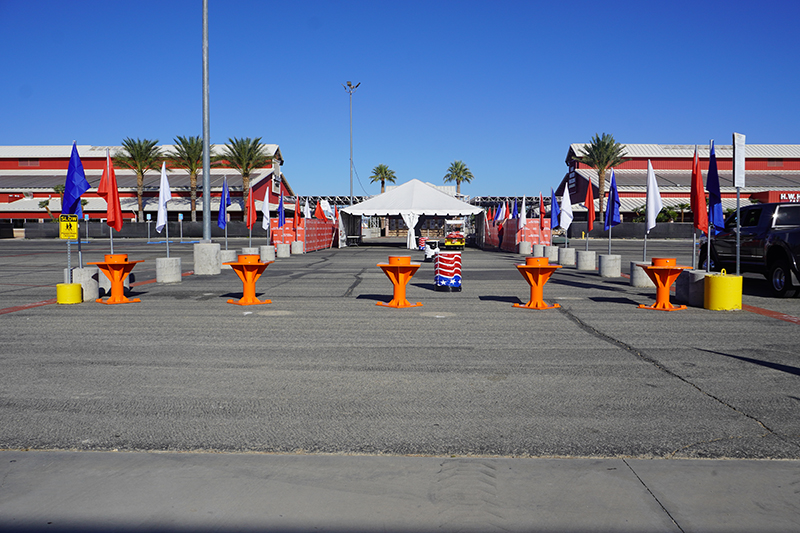
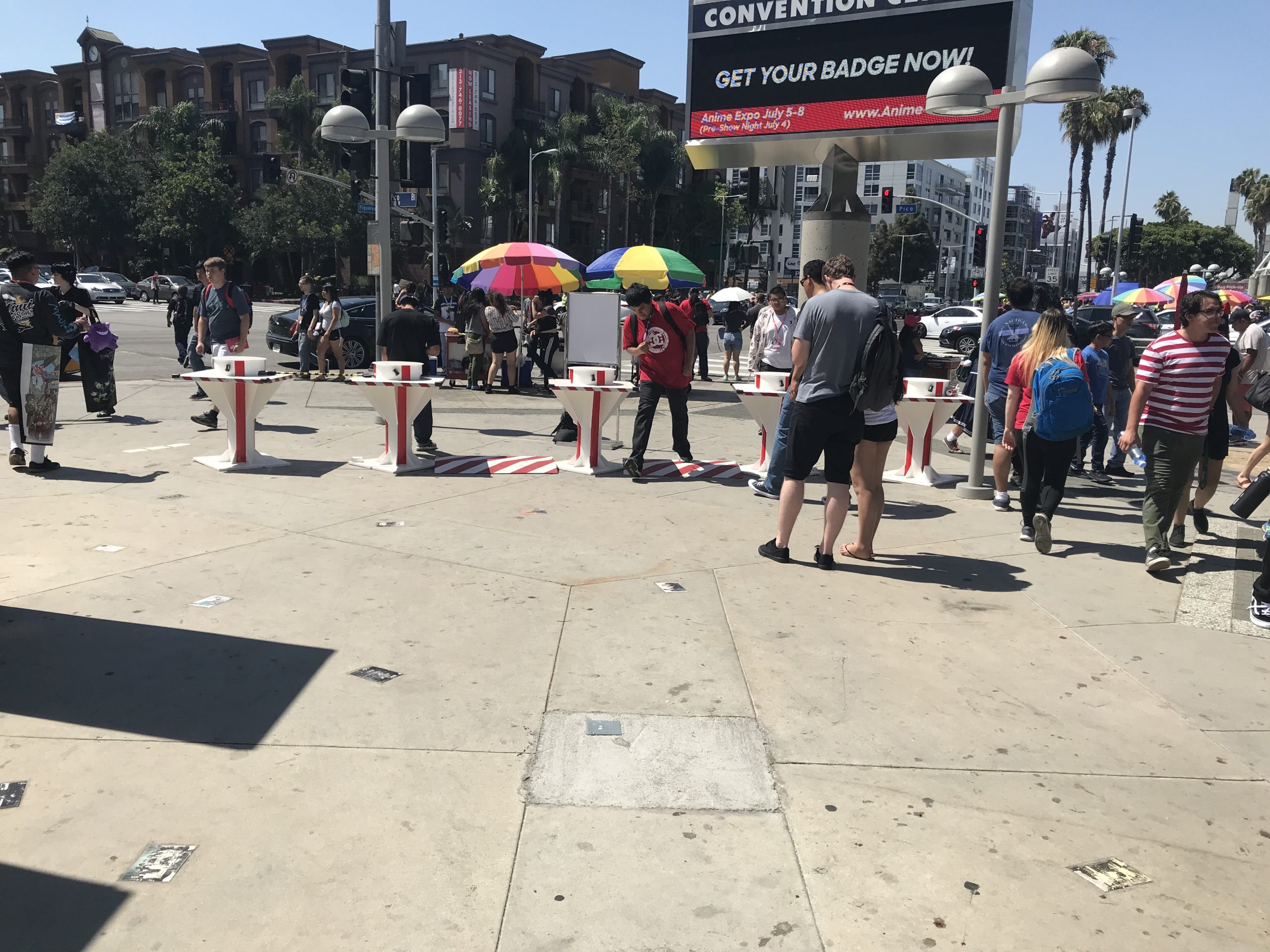
The DSC50 “S” Barrier came out of a specific problem set: how to protect pedestrians in busy, temporary environments without digging up streets or building permanent structures.
- Engineered to the ASTM SC30 crash standard, stopping a 2,430 lb vehicle at 30 mph.
- Modular and portable units, moved on dedicated transporters so public works crews can deploy them with normal equipment.
- Bullet-resistant steel construction and a design that balances performance with a clean, civic look.
- Marketed as “the smart solution for crowd safety,” aimed directly at parades, protests, pop-ups, and tourism corridors.
You can see a full product walk-through and crash test footage on Delta’s S Barrier page and in the demo video.
In practice, cities use the S Barrier to stand between vehicles and their existing event plans—not to replace every other tool.
Where Cities Put the S Barrier to Work
Think about three typical municipal situations.
A downtown parade.
Floats line up on a long approach street. Spectators gather along a main corridor. Using S Barriers, the city can harden a handful of intersections where vehicles could run straight into the route, while still using metal barricades for spectator lines and staging areas.
A recurring street market.
The same two blocks close every Saturday. S Barriers can anchor the main vehicle approaches, with portable bollards or MP100 units handling nearby higher-speed entries. Once the pattern is dialed in, deployment becomes part of the standard market checklist.
A short-notice civic rally.
People assemble near city hall. Police expect crowds on the steps and the surrounding streets, but don’t know exactly where they will settle. Having an S Barrier kit available gives planners a way to quickly create vehicle stand-off at the most exposed edges of the crowd.
For more use cases and examples, see Delta’s Event Security solutions page.
Across all three, the pattern is the same: use your existing crowd-control barricades inside the footprint, and add crash-tested vehicle protection at the edges where it matters.
Objections You’ll Hear (and How to Answer Them)
“We park cruisers and dump trucks. Isn’t that enough?”
Using vehicles can help, but they weren’t designed as barriers. They remove assets from service and may not perform predictably in a crash. Crash-tested systems give you documented performance and, typically, a more neutral public image.
“We’re a small city. This feels like overkill.”
You don’t need a crash-tested system at every event. Focus on a few blocks where speeds, crowds, and visibility make risk higher—often your signature parade or main festival street. A modest kit can still meaningfully change your risk profile.
“Our crews are already stretched.”
The S Barrier is designed for municipal operations. With transporters and modular units, setup can be folded into existing event deployment schedules. A pilot event is often enough to benchmark actual time and staffing.
“Will barriers make the event feel militarized?”
The S Barrier’s form factor and branding options are meant to blend with civic streetscapes. Many cities use graphic panels, city logos, or wayfinding on the faces, framing the system as part of the event experience rather than an intrusion.
How to Start a Crowd Protection Conversation in Your City
- Pick one high-profile event and one or two blocks where a vehicle intrusion would do the most harm.
- Map crowd locations, approach routes, and existing crowd-control barricade lines.
- Share that map with Delta and request an S Barrier layout concept and rough counts.
- Run a pilot deployment, capturing timing, staffing, and public feedback.
- Use that pilot to shape a multi-year plan for crowd protection at your biggest events.
Conclusion and Next Steps
Crowd control tools still have a place at every city event. What’s changing is the expectation that vehicles will be managed with the same level of intent and proof. Crash-tested solutions like the DSC50 “S” Barrier give municipalities a way to show they’ve considered vehicle threats and taken practical, repeatable steps to address them.
If you’re ready to explore how the S Barrier or other portable systems could support your event portfolio, connect with Delta’s team for a quote or via the Contact Us page. We can review your map, recommend barrier options, and help you build a plan that fits your streets and your budget.
Recent Posts



Frequently Asked Questions
Delta Scientific
Delta Scientific Corporation is the world’s leading manufacturer of vehicle access control equipment. Delta Scientific has been engineering and manufacturing vehicle access control equipment and selling its products worldwide since 1974.