
Why Improvised Barriers Fall Short in Protecting Crowds
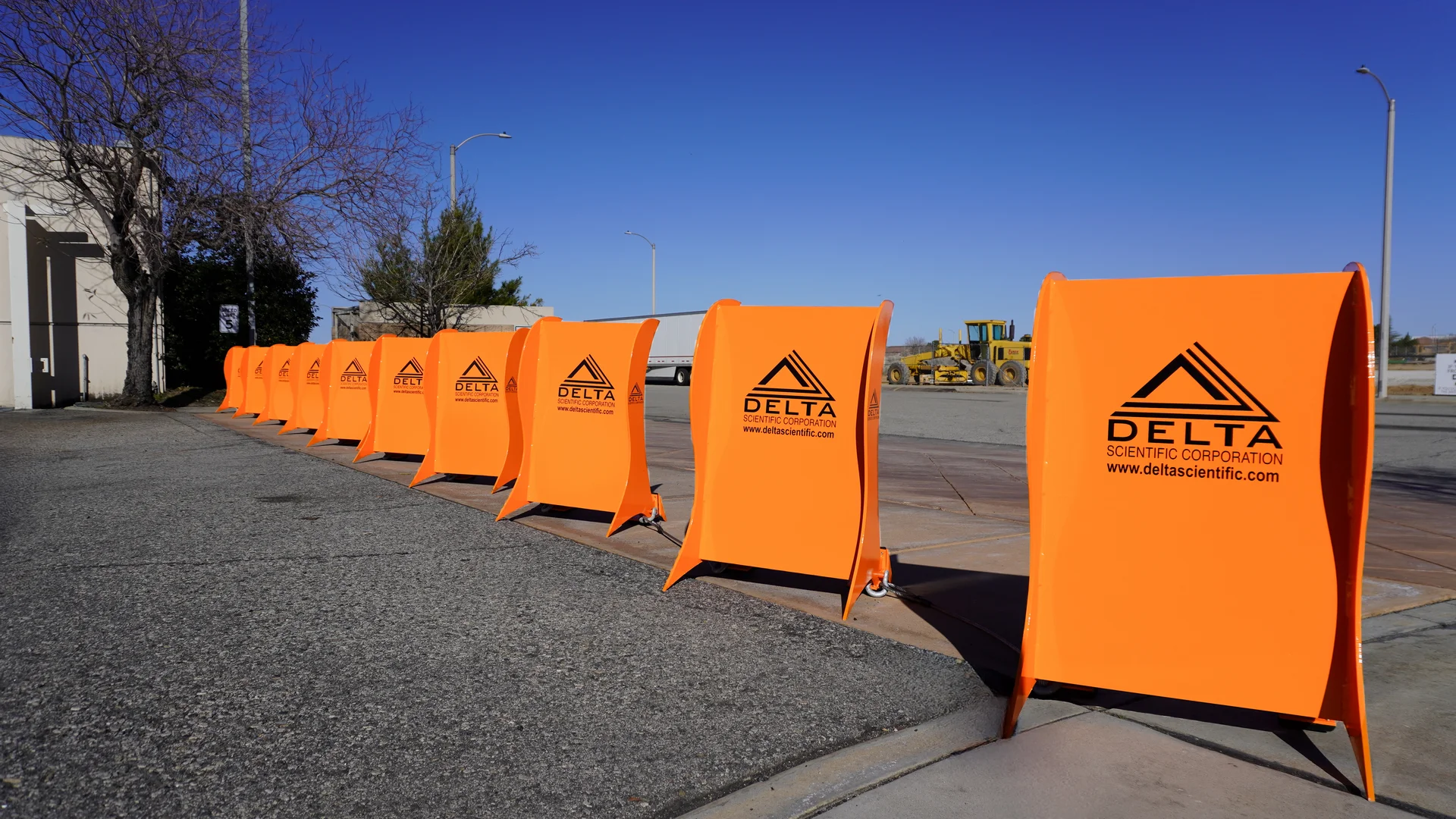
I recently read a news story, stating that the Appleton Mayor Jake Woodford recommended the city purchase a barrier system to prevent vehicles from being driven accidentally or intentionally into crowds of people during city events and other public gatherings.
Though I am always relieved to hear about city officials taking public safety concerns seriously, I also noticed that there were a lot of questions and misconceptions from citizens on if such precautions are even necessary. Most of it comes down to a lack of knowledge, and so I am compelled to share some insight on some of the comments that stood out to me:
One commenter wrote, “OR. Let people park there to form a completely free barricade.”
At first glance, that may sound practical. In reality, a parked vehicle is not designed to stop another moving vehicle. It is designed to move, not resist impact. When struck at speed, it can be pushed, rotated, or displaced entirely. It may even create additional hazards as it moves unpredictably. There is no engineering standard behind a line of parked cars. There is no verified performance. Public safety cannot depend on assumptions. By this logic, you are also asking that the crowd itself become the barrier, and that is simply not acceptable.
Another comment stated, “I’m sure you can get a local welder to make those for you.”
Strength is not the same as tested performance. Crash-rated barrier systems are developed through rigorous engineering and validated through controlled impact testing. They are rated to stop specific vehicle weights traveling at specific speeds, with defined penetration limits. A custom-fabricated solution, no matter how well intentioned, lacks that certification. Without testing, there is no way to confirm how it will behave in a real-world event. In this context, uncertainty is unacceptable.
A third comment asked, “Isn’t putting city vehicles as barriers… sufficient and cost effective?”
City vehicles are valuable public assets. Using them as barriers introduces risk to both the equipment and the people relying on it. In an impact event, those vehicles can be severely damaged or rendered inoperable. More importantly, they are not engineered to absorb and manage crash energy in a controlled way. Purpose-built barrier systems are designed to stop vehicles while minimizing secondary damage and maintaining their position. Cost effectiveness should always be evaluated alongside reliability and consequence. The lowest upfront cost does not equate to the lowest overall risk.
There is also a legal dimension that cannot be ignored. When a municipality hosts a public event, it assumes a duty to provide reasonable protection for attendees. When known risks exist and proven mitigation methods are available, the expectation is to use them. Improvised measures make it difficult to demonstrate due diligence. Certified, crash-rated systems provide documented performance and recognized standards. That distinction carries weight in legal proceedings. The cost of litigation, settlements, and reputational damage can far exceed the cost of proper protection.
Another reader questioned, “Has this ever been needed before?”
There is a clear and sobering answer. Yes.
The Waukesha holiday parade is one example. A vehicle entered a crowded public event route. Lives were lost. Dozens were injured. Similar vehicle-into-crowd incidents have occurred in other communities as well. These events are not everyday occurrences, but their impact is severe when they do happen. Public safety planning exists to address exactly these low-frequency, high-consequence scenarios.
Events like these also shape legal expectations. Once a risk is demonstrated and solutions are available, the standard of care evolves. What may have once been considered sufficient is no longer acceptable. Choosing not to adopt proven protective measures can be interpreted as negligence.
Crash-rated barriers exist because these risks are real. They are designed, tested, and certified to perform under defined conditions. They provide predictability where improvised measures cannot. When a vehicle approaches a protected area, there is no time to question whether a solution will work. It must already be proven.
Communities deserve safety measures that are deliberate and reliable. The goal is to be prepared.
Recent Posts



Keith Bobrosky
Keith Bobrosky is President of Delta Scientific. A former applications engineer, he writes and speaks to the practical side of vehicle security, connecting crash ratings and standards to what works on real sites.