
Vehicle Barriers for Construction Sites: Protecting Workers and Temporary Perimeters
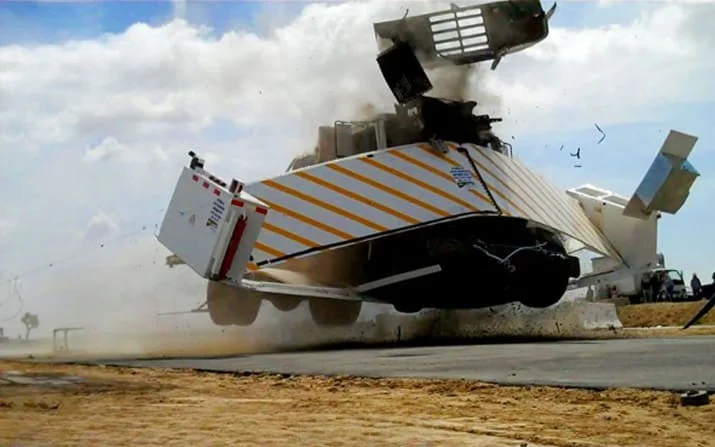
Construction Sites Need More Than Cones and Caution Tape
Most work zones already use cones, drums, temporary fencing, sawhorses, and signage to show drivers where not to go. Those tools matter, but they are not vehicle barriers in the protective sense. They guide traffic. They do not stop a vehicle that enters the wrong lane, turns too fast, or pushes through a temporary perimeter.
That distinction matters because construction-site risk is not limited to deliberate attack scenarios. Many projects need protection from routine vehicle intrusion risks: delivery trucks backing into active walkways, unauthorized cars entering staging areas, or heavy equipment routes crossing pedestrian paths. Some sites also border public streets, transit corridors, campuses, or civic spaces, which raises the consequence of a vehicle getting where it should not be.
A practical starting point is Delta’s earlier guide, What Is a Bollard in Construction?, which explains how bollards help separate traffic and protect workers. For larger projects, the planning question is broader: what mix of barriers will protect the site edge, secure temporary perimeters, and still let authorized traffic move?
The Three Barrier Roles Most Sites Need
On most active projects, vehicle barriers fall into three roles.
- Worker-edge protection, placed at the edge of a work zone, along a temporary pedestrian path, or around equipment and laydown areas where vehicle entry would create immediate safety risk.
- Perimeter hardening, used where the site borders a roadway, public plaza, or exposed approach and needs a more deliberate vehicle-stopping capability.
- Entry control, at the points where approved vehicles still need to move in and out without opening the rest of the site to uncontrolled traffic.
Once those roles are clear, the main barrier families make more sense. Shallow-foundation bollards protect fixed edges. Portable barriers handle temporary conditions and shifting site geometry. Traffic teeth control one-way or supervised vehicle movement at gates and service lanes.
Where Shallow-Foundation Bollards Fit

Shallow-foundation bollards are often the best answer when a project needs real vehicle-stopping capability but cannot tolerate a deep excavation. That is common on urban sites with utility congestion, suspended slabs, vaults, basements, tunnel structures, or phased work around existing infrastructure. Delta’s DSC633 shallow-foundation bollard and DSC635 shallow-foundation bollard are examples of crash-tested systems designed for projects where available depth is limited.
For construction applications, shallow-foundation bollards are especially useful at temporary worker entrances that will become permanent protected edges later, at the perimeter of utility compounds, and along pedestrian paths that run close to public traffic. They also work well when a project needs a cleaner, less bulky visual line than a beam or wedge barrier.
Installation still has to be planned carefully. Underground conflicts, drainage, existing slab conditions, and final spacing all affect performance. Delta’s guide on how to install a bollard properly is a useful internal reference for the sequencing and site checks that matter before concrete work begins.
The main limitation is operational flexibility. A fixed bollard line is excellent at keeping vehicles out, but it does not solve the problem of approved deliveries, changing haul routes, or event-driven site changes. That is where portable or removable options come in.
Where Portable Barriers Fit
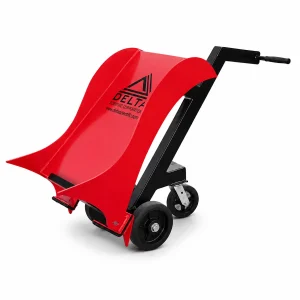
Portable barriers make sense when the site perimeter changes often or when protection must be deployed without major civil work. Delta’s portable vehicle barrier line is designed for quick deployment in places where crews need meaningful protection but do not have time or site conditions for permanent foundations.
On construction projects, that usually means temporary road closures, weekend lane shifts, special crane picks, concrete pours near a public approach, or short-term protection for a vulnerable edge while permanent site work catches up. Portable barriers also help on phased projects where one side of the site is stable and another is still changing every week.
For projects that need a larger pass-through opening, the MP5000 portable barrier is relevant because it was developed around rapid deployment, straightforward operation, and a wide clear opening for authorized vehicles. For narrower temporary pedestrian routes or controlled event-style closures around active projects, Delta’s TB100 and TB150 portable bollards can create a more flexible temporary line.
Portable systems are not a replacement for every permanent barrier. They are most effective when the project needs speed, temporary deployment, or phased protection. Used correctly, they let a site add a protective layer without freezing the construction logistics plan.
Where Traffic Teeth Fit
Traffic teeth are different from crash-rated perimeter barriers. Their role is access control, not perimeter hardening. Delta’s motorized traffic control systems are designed to disable or deter unauthorized vehicles at controlled crossings, especially where traffic should move only one way or only under supervision.
On construction sites, that makes them useful at exit-only gates, equipment yards, rental fleets, contractor parking lots, and service entrances where the risk is not a high-speed attack but repeated unauthorized movement through a controlled point. In that role, they help enforce the circulation plan that the rest of the barrier system depends on.
Examples include the MTC31, MTC6000, and heavier-duty TC28 sabre tooth system. These products are not substitutes for shallow-foundation bollards or crash-rated portable barriers. They are complementary tools for keeping authorized and unauthorized traffic separated at day-to-day access points.
That distinction is important for specifications. Traffic teeth belong at managed crossings. They do not replace a protective perimeter where workers or exposed assets sit directly behind the line.
How to Build a Practical Construction-Site Barrier Plan
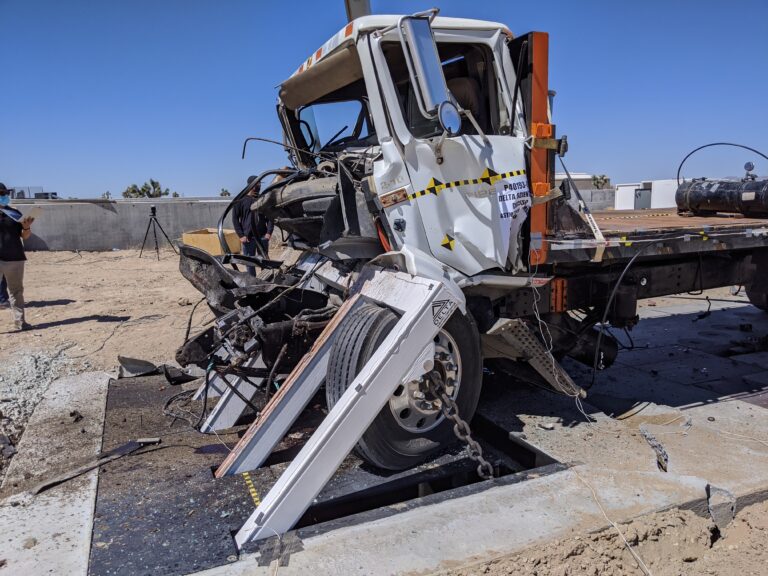
A good construction-site plan usually layers barrier types instead of forcing one product family to solve every problem.
- Use shallow-foundation bollards where the site edge needs continuous vehicle protection but excavation depth is limited.
- Use portable barriers where the perimeter shifts with project phasing, temporary closures, or short-term high-exposure work.
- Use traffic teeth at supervised gates, service drives, and exit-only lanes where controlling authorized traffic flow is the priority.
This layered approach also aligns with broader hostile vehicle mitigation guidance. CISA and other federal resources consistently frame vehicle protection as part of a layered plan rather than a single standalone device. On a construction site, that translates into combining physical barriers, traffic routing, supervision, and clear operating procedures at the same time.
What Standards Matter and What They Do Not
For crash performance, ASTM F2656 is the main reference point for full-scale testing of vehicle security barriers. Delta’s crash-rated bollards and portable barriers use that framework for M ratings such as M30 and M50. ASTM F3016 is a different standard used for low-speed surrogate testing of certain protective devices, and it should not be treated as interchangeable with F2656 when the project is evaluating high-security stopping performance.
For many construction projects, the right question is not whether the site needs the highest available rating. The right question is what kind of vehicle approach is possible, how exposed the workers and assets are, and whether the barrier is protecting against routine intrusion, a higher-threat scenario, or both. That is why site geometry and operations should drive barrier choice, not product category alone.
Choose the Barrier Family That Matches the Work
Construction sites change fast. A barrier plan that looks good on a drawing can fail in practice if it blocks deliveries, ignores underground conflicts, or leaves temporary walkways exposed while phases shift.
The better approach is to match the barrier family to the job. Use shallow-foundation bollards where depth is the limiting factor but real stopping power is still required. Use portable barriers where protection has to move with the project. Use traffic teeth where gate discipline matters more than perimeter stopping. That is how temporary perimeters become safer without making the site harder to run.
If you are comparing options for an active project, start with Delta’s bollard systems, portable barriers, and traffic control systems to map each area of the site to the right level of protection and control.
Recent Posts


Frequently Asked Questions
Delta Scientific
Delta Scientific Corporation is the world’s leading manufacturer of vehicle access control equipment. Delta Scientific has been engineering and manufacturing vehicle access control equipment and selling its products worldwide since 1974.