
Can Your Security Barrier Operate During a Power Outage?
Article Summary
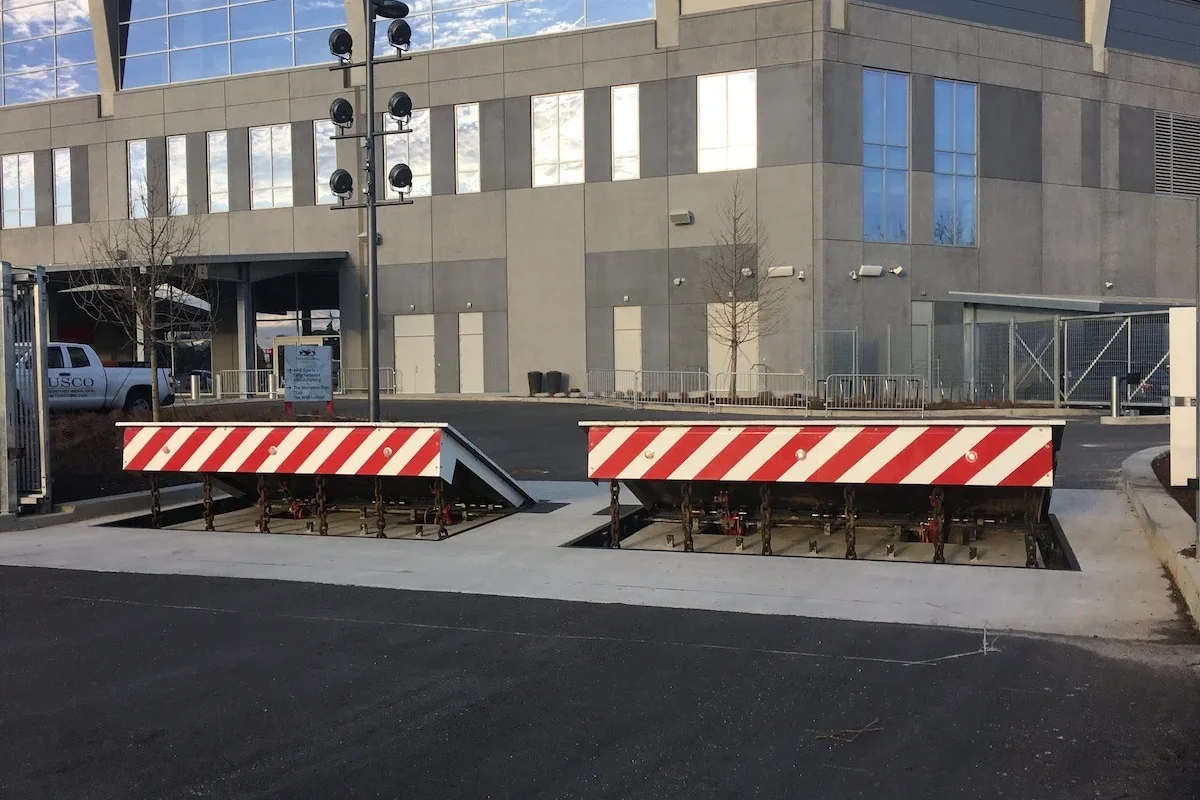
What happens to a security barrier during a power outage? High-security vehicle barriers may need to remain operational even when primary electrical power is lost. The Delta Scientific DSC501 can be configured with several layers of backup operation, including stored hydraulic pressure, enhanced power-off capability, manual operation, battery backup, and a dedicated hydraulic reserve for Emergency Fast Operation (EFO). This article explains how these options help facilities maintain vehicle access control and security during short-term and prolonged power outages.
When we talk about high-security vehicle barriers, we usually talk about stopping power.
How big is the vehicle? How fast is it moving? How far does the barrier allow it to penetrate?
Those questions matter.
But there is another question that should be part of the conversation.
What happens when the power goes out?
A storm, utility failure or other disruption can happen at any time. For a high-security facility, losing electrical power does not eliminate the need to control and protect the entrance.
That is why power-off operation should be considered when specifying a vehicle barrier.
With the DSC501, there are several ways to prepare for it.
1. Stored Hydraulic Pressure
The DSC501 hydraulic system uses an accumulator to store pressure.
That stored hydraulic pressure can allow the barrier to continue operating when primary electrical power is unavailable.
It provides a first layer of backup without requiring normal electrical power.
2. Enhanced Power-Off Capability
Some facilities may need more operations during an outage.
The DSC501 can be configured with additional accumulator capacity based on the needs of the entrance.
The question is not simply whether the barrier can operate without power. It is also how many operations the facility may require.
That is something we can plan for when the system is specified.
3. Manual Operation
What if the outage lasts longer?
The DSC501 also provides a manual method of operation.
A hand pump can be used to raise the barrier during a prolonged power interruption. This gives security personnel another way to maintain control of the entrance when normal power is unavailable.
It is simple, but important.
4. Battery Backup Operation
Battery backup provides another option.
Delta’s Battery Backup System provides electrical power to operate the DSC501 during a loss of primary power.
This allows the barrier to continue normal powered operation for multiple cycles.
For facilities that need to keep an entrance operating during an outage, battery backup provides another layer of redundancy.
5. Dedicated Emergency Reserve
There is one more situation we need to consider.
What happens if an emergency occurs during the outage?
The DSC501 can be configured with Enhanced Emergency Fast Operation, or EFO.
This option uses a separate hydraulic pressure reserve for emergency-fast operation. That reserve is designed to remain available even after the normal hydraulic reserve has been depleted.
Continuing to operate the entrance is one requirement.
Maintaining the ability to respond to an emergency is another.
Plan for the Outage Before It Happens
I have spent a lot of years around vehicle barriers. One thing I have learned is that the best time to think about unusual operating conditions is before they happen.
Power loss is one of those conditions.
When specifying a high-security barrier, ask a few questions.
How will it operate without primary power? How many operations will be available? What happens during a prolonged outage? Can normal powered operation continue? And what happens if an emergency occurs while the power is already down?
There is no single answer that fits every entrance.
That is why we configure these systems around the requirements of the facility.
How many power-off operations does your entrance require?
Delta Scientific can help determine the right DSC501 configuration for your application.
Recent Posts



Frequently Asked Questions
Keith Bobrosky
Keith Bobrosky is President of Delta Scientific. A former applications engineer, he writes and speaks to the practical side of vehicle security, connecting crash ratings and standards to what works on real sites.