
What Do UL 752 Levels 9 and 10 Mean?

Understanding Ballistic Protection for High-Security Sites
As security threats continue to evolve, facilities responsible for protecting critical infrastructure, government assets, military installations, and other high-security locations require solutions that address more than just vehicle attacks. Ballistic threats have become an increasingly important consideration in perimeter security.
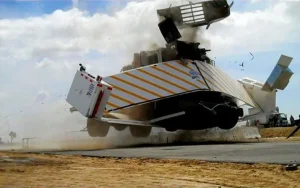
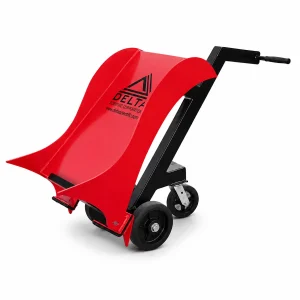
To help meet these evolving security demands, Delta Scientific Corporation recently evaluated its new DSC50 Portable Barrier System for ballistic resistance in accordance with UL 752, Standard for Bullet-Resisting Equipment. The DSC50 successfully achieved UL 752 Level 9 and UL 752 Level 10 ballistic resistance classifications, providing an additional layer of protection beyond traditional vehicle mitigation.
But what exactly does a UL 752 rating mean, and why is it important?
What is UL 752?
UL 752, Standard for Bullet-Resisting Equipment, is an industry-recognized standard published by UL Solutions that establishes testing procedures and ballistic resistance classifications for protective equipment. The standard evaluates how well a product can resist specific firearm threats under controlled laboratory conditions.
Testing is conducted using specified ammunition, impact velocities, firing distances, and shot location requirements. To achieve a particular UL 752 classification, the test specimen must:
UL 752 is commonly used to evaluate products such as:
Each level within the standard represents a progressively more severe ballistic threat, allowing security professionals to select products appropriate for their specific application.
Applying UL 752 to Vehicle Barriers
UL 752 is most commonly associated with bullet-resistant glazing, doors, and security enclosures. However, today’s security environments often require protection against multiple types of threats.
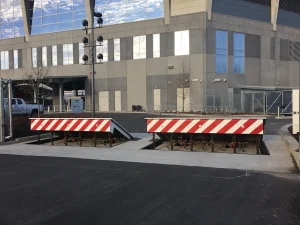
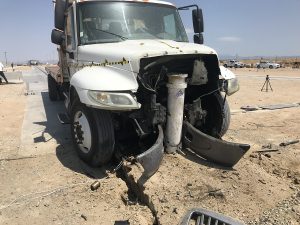
The DSC50 Portable Barrier System demonstrates how ballistic resistance can be incorporated into a portable vehicle barrier, combining vehicle access control with certified ballistic protection. This dual-purpose approach enhances perimeter security by helping protect against both vehicle-borne threats and ballistic attacks.
Understanding UL 752 Level 9
UL 752 Level 9 evaluates a product’s resistance to a .30-06 Springfield M2 Armor-Piercing (AP) projectile fired under controlled laboratory conditions.
This level represents a significant ballistic threat capable of penetrating many conventional construction materials. To achieve a Level 9 classification, the barrier must stop the projectile without complete penetration while preventing hazardous fragments from exiting the protected side.
Understanding UL 752 Level 10
UL 752 Level 10 is the highest ballistic resistance classification defined within the UL 752 standard.
Testing is performed using a .50 caliber M2 Ball projectile fired under specified test conditions. Due to the size and energy of this ammunition, Level 10 represents one of the most demanding ballistic evaluations within the standard.
Successfully achieving a Level 10 classification demonstrates that the product can withstand one of the highest ballistic threats evaluated under UL 752.
A Comprehensive Approach to Perimeter Security
Modern security challenges rarely involve a single type of threat. Facilities must often consider unauthorized vehicle access, forced entry, and ballistic attacks when designing their perimeter protection strategy.
By combining portable vehicle stopping capability with certified ballistic resistance, the DSC50 Portable Barrier System provides organizations with an additional layer of protection.
As security requirements continue to evolve, solutions that address multiple threat types help organizations build stronger, more resilient perimeter defense systems.
Recent Posts

Frequently Asked Questions
Daniela Perez Valencia
Mechanical Engineer