
Crash-Rated Wedge Barriers: Where They Outperform Gates and Bollards
Article Summary
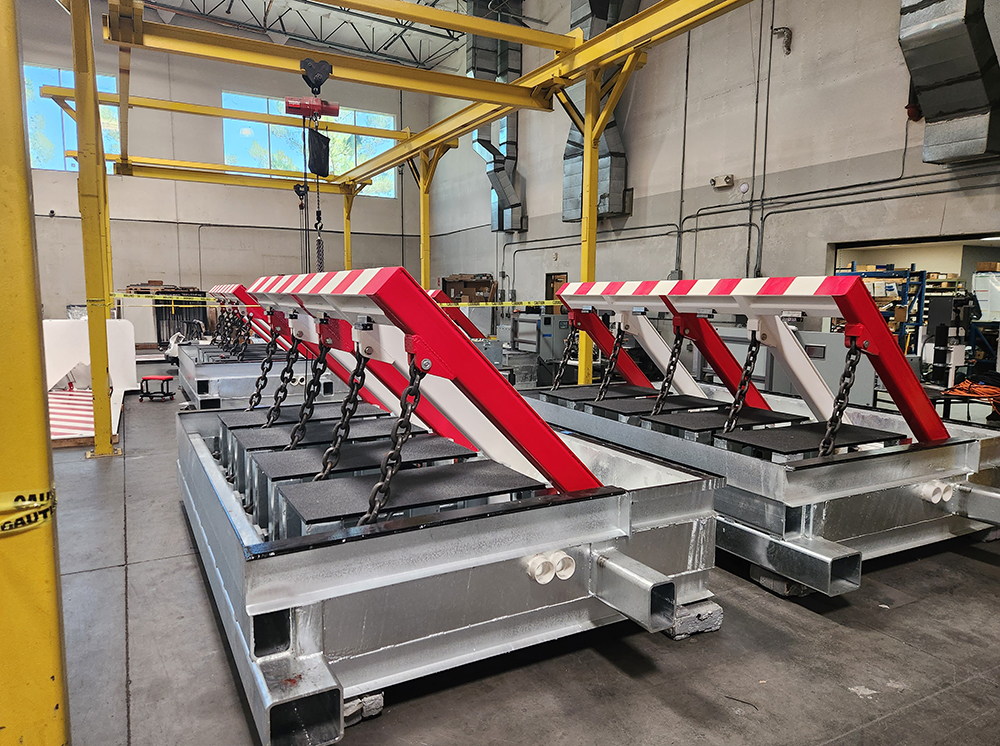
Crash-rated wedge barriers are active, in-ground vehicle barriers that rise from the pavement to block a lane, then lower flush for daily traffic. This guide explains where they beat gates and bollards, what shallow foundations change during installation, and how to factor EFO raise time into real operations.
Crash-Rated Wedge Barriers: Where They Outperform Gates and Bollards
Sites that control vehicles usually want two things: stopping power and throughput. Wedge barriers exist for the entrances that need both.
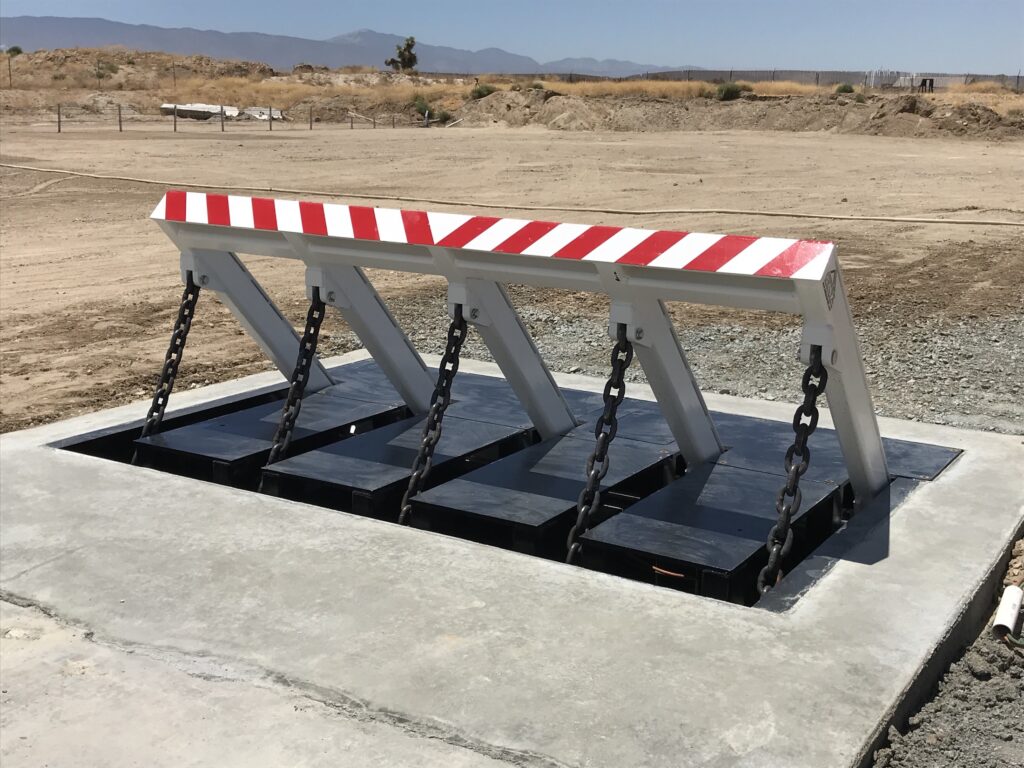
A wedge barrier sits flush with the roadway when lowered. When raised, it presents a solid, angled face across the full lane. That makes it a practical option when a gate is hard to fit, or bollards would leave too many gaps in a lane opening.
Standards note: ASTM F2656 is a common reference for crash testing and rating designations. For rating context and terminology, see the DoD Anti-Ram Vehicle Barriers List.
What Is a Crash-Rated Wedge Barrier?
A wedge barrier, sometimes called a wedge barricade, is an active vehicle barrier installed in the roadway. Electric or hydraulic actuation raises a wedge-shaped plate to block the lane.
“Crash-rated” typically means the system has been tested to a recognized standard. In the U.S., ASTM F2656 is a common reference for crash testing and rating designations.
Where Wedge Barriers Beat Gates
A gate can control access, but it is not automatically the stopping element. Wedge barriers are often the better fit when you do not have room for swing clearances or long slide runs, or when you need frequent cycles without long queues.
Wedges also keep the “stop line” at the lane itself. With many gate layouts, the structural stopping element is set back from the gate, which can add complexity in short approaches.
Where Wedge Barriers Beat Bollards
Bollards are strong for perimeter edges and pedestrian areas. In a vehicle lane, the challenge is continuous coverage plus frequent opening for authorized traffic.
A wedge barrier can secure the full lane width and still open and close for deliveries, service vehicles, and shift changes. It is also flush when lowered, which helps in high-traffic lanes.
Shallow vs Deep Foundations, In Practical Terms
Foundation strategy matters because it drives excavation, dewatering, utility relocation, and schedule risk. Shallow foundation wedge barriers are designed to limit excavation depth, which can help when utilities are dense, rock is close, or a high water table is present.
Shallow foundation does not mean “no planning.” You still need drainage, concrete design, and coordination with pavement sections and loops. It does mean your install plan can often avoid deep relocation work that delays commissioning.
Deeper foundation approaches can still be right when a project is building new lanes with clear subsurface conditions. The key is to treat foundation depth as a requirement early, not a detail to solve later.
EFO Speeds, Why Raise Time Can Be a Spec Requirement
EFO means Emergency Fast Operation, the barrier’s rapid raise mode for urgent events. If a lane runs open most of the time to keep traffic moving, raise time affects whether the barrier can get into position before a vehicle reaches the line.
In practice, raise time should be reviewed alongside approach distance, guard sight lines, and decision points. A barrier can be crash rated and still be a poor fit if the operational pattern leaves it down when you need it up.
When a Wedge Barrier Is Not the Best Choice
Wedge barriers are not a universal answer. They may be the wrong fit when a site needs a very wide opening in one move, when the entrance geometry forces a barrier to sit too far from the control point, or when civil constraints make any in-ground work impractical.
In those cases, a crash-rated gate, a beam barrier, or a bollard line may be a better starting point, sometimes paired with traffic calming to reduce approach speeds.
Delta Examples: Ratings, Foundation Depth, and EFO Notes
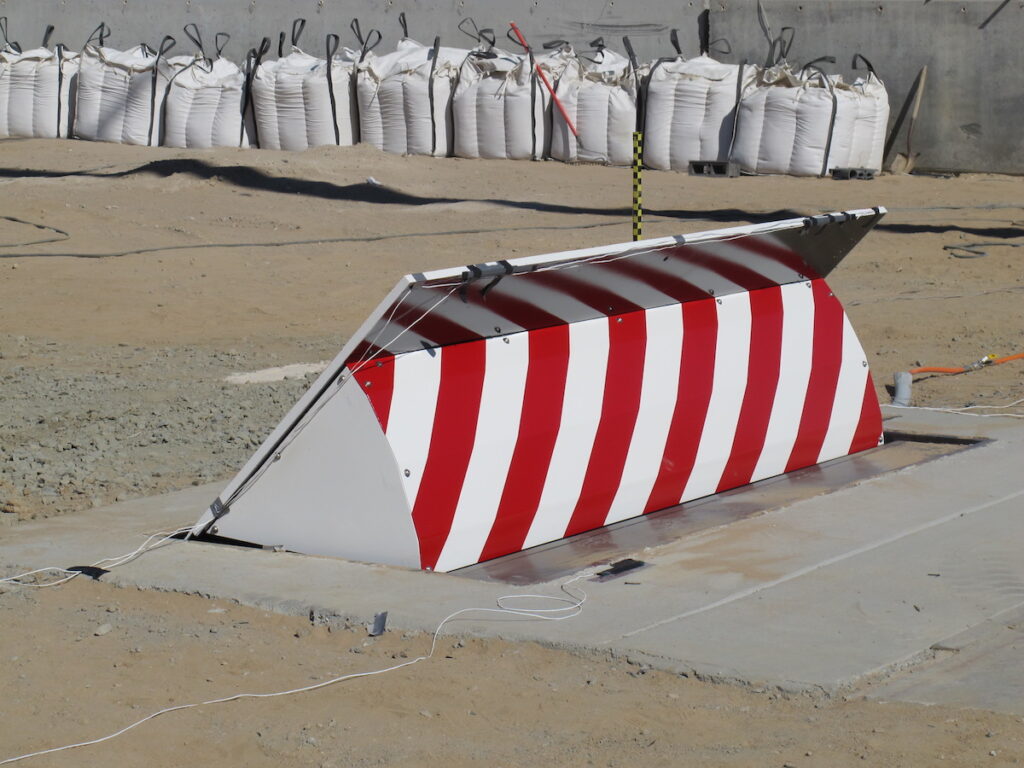
These examples show how rating, foundation depth, and operating speed show up on real product pages. Use them to frame requirements, then confirm details for your site and lane geometry.
HD200 wedge barricade
Product page: HD200 wedge barricade
- ASTM M30/P1 crash rated, tested to stop a 15,000 lb vehicle at 30 mph with less than 1 m penetration.
- Shallow foundation design (24 inches deep).
- EFO about 0.63 seconds (normal cycles noted as 2 to 5 seconds).
HD300 wedge barrier
Product page: HD300 wedge barrier
- Certified M50/P1, designed to stop a 15,000 lb vehicle at 50 mph.
- Shallow foundation noted as about 24 inches.
- EFO noted as 1.5 seconds.
DSC550 shallow foundation barricade
Product page: DSC550 shallow foundation barricade
- Certified M50/P1 to ASTM F2656-20, stopping a 15,000 lb vehicle at 50 mph.
- Shallow foundation depth noted as about 24 inches.
- EFO noted as 1.5 seconds (electro-mechanical) and 0.75 seconds (hydraulic).
DSC501 wedge barricade
Product page: DSC501 wedge barricade
- Certified K12/L3 and tested up to K54, per Delta’s product page and Department of State certification language.
- Shallow foundation design noted as only 18 inches deep.
- Operational note: rises in less than 2 seconds when danger is imminent (pass-through rates also noted as 3 to 15 seconds).
Quick Decision Guide
Use this when teams are stuck in a “gate vs wedge vs bollard” loop.
- Need active lane control with full-width stopping power and fast cycling: start with a wedge barrier.
- Need perimeter line protection with pedestrian flow and sight lines: start with bollards.
- Need traffic management plus a hard stop: consider layering a gate with a wedge barrier behind it.
Site Questions to Answer Before You Choose
These questions prevent rework after procurement starts.
- What is the longest straight approach to the lane, and what speeds can a vehicle realistically reach?
- Where are utilities, drainage structures, and pavement joints within the barrier footprint?
- What is the required clear opening, and how many vehicles per hour must pass without queuing into public roads?
- Is the barrier expected to run down most of the time, or up most of the time?
- Do you need emergency fast raise from a remote trigger point (guard booth, panic button, or integrated system)?
- What is the maintenance access plan, and where will the power unit and controls live?
What to Document in a Spec
A clear spec ties crash performance to install and operations.
- Rating and standard, plus penetration where applicable (example: ASTM F2656-20 M50/P1, or K12/L3 where required).
- Clear opening width, lane geometry, and interface to drainage and curb lines.
- Foundation depth constraints and known subsurface risks (utilities, rock, water table).
- Cycle expectations and any required EFO performance.
Conclusion and Next Steps
Crash-rated wedge barriers are a strong fit when you need stopping power and throughput in the same lane, especially where deep excavation is a problem.
Start with approach conditions, lane geometry, and foundation constraints, then match the site to a wedge barrier, bollards, gates, or a layered combination.
To size and place a system, share a lane plan view and site constraints, then request a quote or contact Delta.
Recent Posts





Frequently Asked Questions
Keith Bobrosky
Keith Bobrosky is President of Delta Scientific. A former applications engineer, he writes and speaks to the practical side of vehicle security, connecting crash ratings and standards to what works on real sites.