
Crash-Rated vs Non-Crash-Rated Bollards: What Facility Owners Need To Know
Article Summary
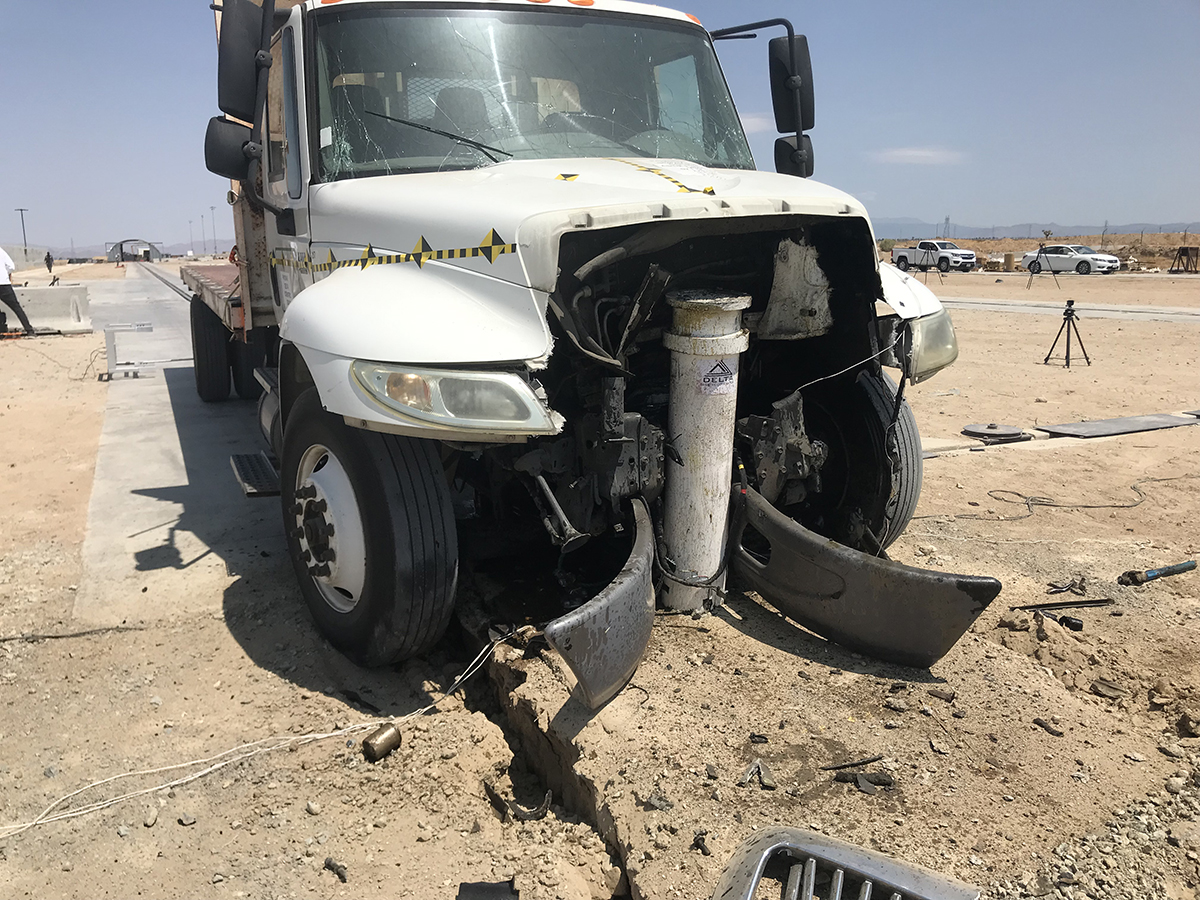
A “bollard” can mean anything from a decorative post to a crash-tested security barrier. If your goal is to stop a vehicle, you need bollards with published test ratings and a designed foundation, not just steel posts set in concrete.
Why this comparison matters
Facility owners often discover the difference between “posts in the ground” and real vehicle protection after a close call or a renovation. The term bollard is used broadly in construction and streetscape work, but the performance requirements can be completely different.
This article keeps it simple and factual. Crash-rated bollards are engineered and tested to stop vehicles under defined conditions. Non-crash-rated bollards may still serve useful purposes, such as guiding traffic or protecting equipment from low-speed contact, but they are not validated for vehicle stopping.
What “crash-rated” means in plain English
Crash-rated bollards have been tested (or are part of a tested system) to a recognized vehicle impact standard. The rating tells you the test vehicle mass class, impact speed, and the measured results such as penetration.
In the U.S., many security barriers use standardized testing such as ASTM F2656, which expresses performance using an M rating and a penetration rating. Other rating systems also exist, and the key is that the results are published and traceable.
A critical point: the foundation and installation details are part of the tested system. A rated bollard installed on a different footing, in different soil conditions, or with different embedment may not behave like the test configuration.
What non-crash-rated bollards typically are
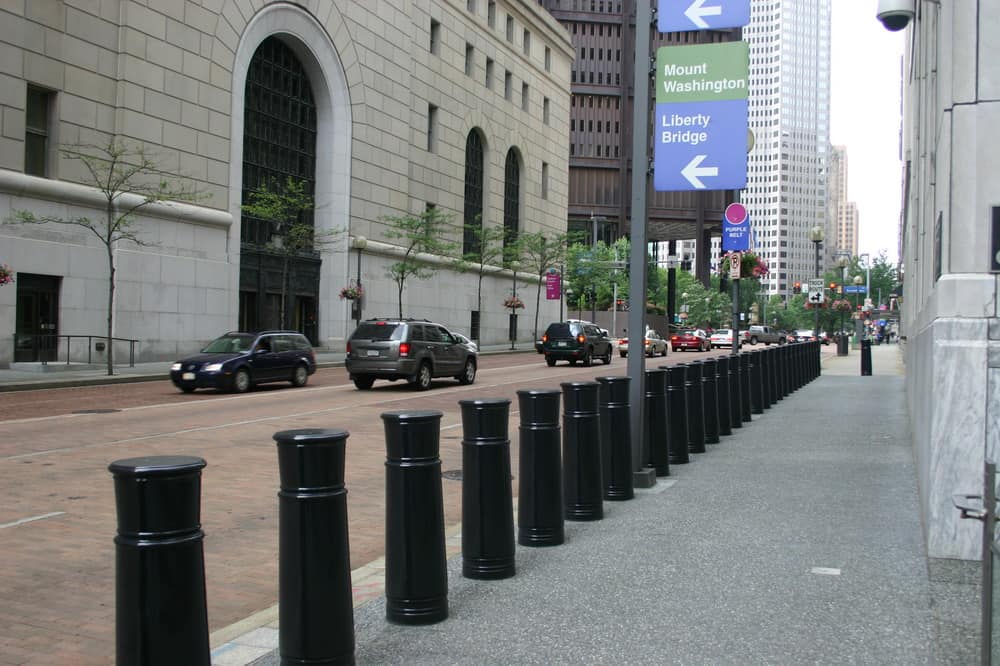
Non-crash-rated bollards are commonly used as architectural or light-duty protective elements. They may be pipe posts, decorative sleeves over pipe, cast posts, or removable posts meant to guide vehicles and define space.
These posts can be appropriate when the goal is to discourage parking, define a boundary, or absorb low-speed bumps. They are often not tested for impact at higher speeds, and they are often installed with foundations sized for appearance and durability rather than vehicle stopping.
Why many storefront “bollards” are not rated
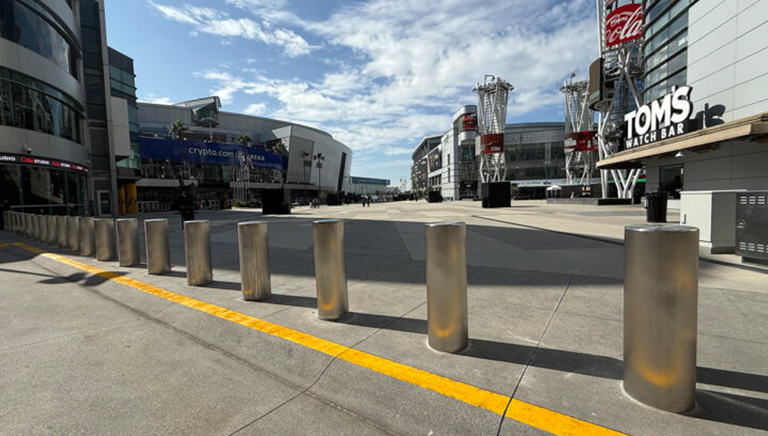
Storefront protection is a common use case where the word bollard creates confusion. Many storefront posts are installed as parking protection or to prevent carts and vehicles from contacting glazing at very low speeds.
That approach can be reasonable for minor bumps. But if a vehicle approaches at roadway speeds, or if the angle of approach is direct, a non-rated post may bend, pull out, or allow the vehicle to reach the building face.
The point is not that non-rated posts are “bad.” The point is that they are usually not designed or validated for the same hazard as a crash-rated security bollard.
Real incident outcomes: what changes when bollards are rated
In real incidents, the difference often comes down to energy management and continuity. A crash-rated bollard system is designed shown to engage the vehicle and keep the protected line intact. A non-rated installation can fail in multiple ways: post deformation, foundation breakout, excessive deflection, or creating a gap wide enough for the vehicle to pass.
Facility owners should treat crash-rated bollards like any other life-safety or security system. You do not buy the shape. You buy verified performance for a defined scenario, then you install it per the tested details.
How to spot a crash-rated bollard in procurement
If you are buying for vehicle stopping performance, ask for evidence and look for specificity. These are the questions that sort systems fast.
- What test standard was used (for example ASTM F2656) and what is the published rating?
- What is the penetration result or penetration category, and how does that relate to your standoff distance?
- What foundation configuration was used in the test and what foundation is being proposed for your site?
- What is the maximum clear opening between bollards, and is spacing based on a defined design vehicle?
- Does the system require shallow foundations due to utilities or slabs, and is that validated by manufacturer details?
When crash-rated bollards are typically the right choice
Crash-rated bollards are typically used when the consequence of vehicle entry is high and you need defined stopping capability.
- Public-facing areas with dense pedestrian presence near vehicle lanes (front doors, queuing areas, plazas).
- Sites with a known vehicle approach path and limited standoff distance to the protected asset.
- Critical infrastructure or controlled entry points where vehicle breach is a primary concern.
- Retrofit projects where shallow foundations are needed due to utilities and you still need tested performance.
When non-crash-rated bollards can be appropriate
Non-crash-rated posts can still be useful when the hazard is low-speed contact and the goal is guidance or minor protection.
- Parking lot edge definition and pedestrian wayfinding.
- Protection of equipment from slow vehicle bumps (cart corrals, utility cabinets).
- Areas where vehicles are physically prevented from gaining speed (tight internal circulation with low speeds and tight turning radii).
Delta examples and how to use them correctly
Delta manufactures crash-rated bollards for security applications, along with other vehicle access control systems. If you are comparing options, use product pages to confirm published ratings and intended installations.
Start with Delta’s High Security Bollards overview for category context.
For constrained sites, shallow foundation systems can reduce excavation depth while maintaining published performance, when installed per the tested configuration.
Example: DSC600 fixed bollard modules are positioned by Delta as shallow foundation modules certified to U.S. Department of State K12. Use Delta documentation to confirm fit and foundation requirements for your site.
A short selection checklist for facility owners
If you are not writing the engineering spec yourself, this checklist helps you ask the right questions and avoid buying the wrong thing.
- Define the goal: guidance, low-speed protection, or vehicle stopping.
- Identify the approach: where a vehicle could come from and how fast it could realistically travel.
- Confirm available standoff distance from bollard line to the people or asset you are protecting.
- If you need stopping performance, require published crash-test evidence and installation details.
- Confirm site constraints: utilities, slabs, drainage, and whether shallow foundations are required.
- Plan spacing and end conditions so there are no bypass routes around the bollard line.
Conclusion
Crash-rated and non-crash-rated bollards serve different jobs. If you need verified vehicle stopping capability, require a published rating and an installation that matches the tested configuration. If you only need guidance or low-speed protection, non-rated posts may be appropriate, but they should not be treated as a security barrier.Next step: If you are evaluating bollards for a public-facing entrance, a retrofit site with utilities, or a controlled access point, Delta can review your layout and performance needs. Contact Delta Scientific to request a quote or technical review.
Recent Posts





Frequently Asked Questions
Keith Bobrosky
Keith Bobrosky is President of Delta Scientific. A former applications engineer, he writes and speaks to the practical side of vehicle security, connecting crash ratings and standards to what works on real sites.