
Beam Barricades: When One Is Too Much and Also Not Enough
Op-ed by Anthony Loya, Senior Production Engineer and QA Manager
July 13, 2026
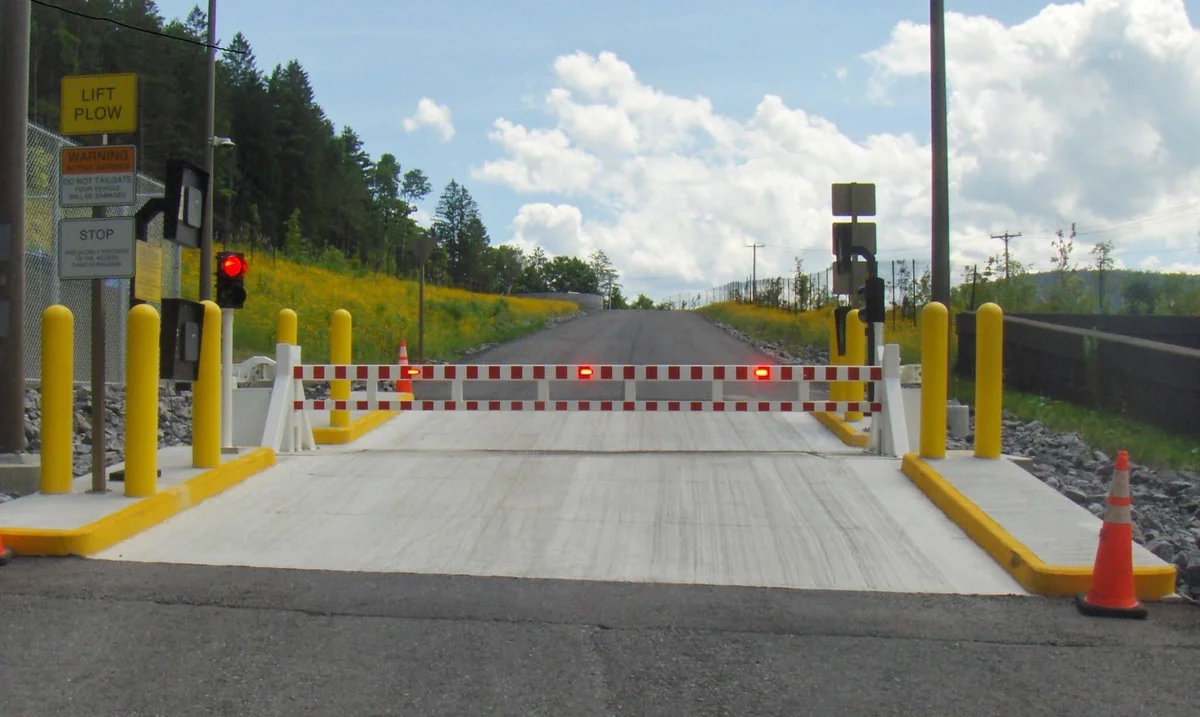
Delta Scientific carries several different types of beam barricades. In fact, I counted nine different types on our website, with varying levels of protection ranging from M30 to M50/K12.
With so many configurations, ratings, lengths, and operating options available, selecting the correct system for a facility can be challenging. The largest beam is not always the safest or most practical choice.
One request that frequently crosses my desk is for a long beam spanning two and a half lanes (more than 24 feet) that must meet a site specification of less than two seconds for EFO, or Emergency Fast Operation. These requests also often call for a high cycle rate, with the beam raising and lowering for every vehicle passing through the site. This is something I see often, and I do not always agree that it is the best solution.
Delta Scientific has been designing, testing, and manufacturing beam barricades for decades. We have a strong line of products installed around the world. It is no secret that customer demands are increasing because site requirements are also becoming more demanding.
This is where I believe bigger is not always better, and some pushback may be necessary.
Large beams may perform their intended function, but they can also come with higher maintenance costs and potential security concerns. For example, a beam operating at an ideal normal speed at approximately one second per foot. Therefore, a beam spanning 24 feet may take about 24 seconds to fully raise and another 24 seconds to fully lower.
That is not a short period of time.
Yes, EFO can reduce the lowering time to less than two seconds during an emergency. However, using EFO for every cycle would be like driving your car to work at 100 miles per hour every day. The vehicle may be capable of doing it, but it is neither practical nor advisable.
For example, a small and responsive vehicle, such as a Volkswagen Golf, could easily pass beneath a slow-moving beam that takes 24 seconds to lower. It is even possible that three small vehicles traveling side by side could pass through before the beam reaches the fully lowered position during normal operation.
That is not acceptable. It can make a site more vulnerable to smaller vehicles.
Just as it is not practical to drive to work at 100 miles per hour every day, it is also neither practical nor safe to move a 1,600-pound piece of steel downward at extreme speed every time Eric wants to leave the site to get Chipotle for lunch.
Another concern with longer beams is maintenance. A faster, heavier beam operating at a high cycle rate will require more frequent maintenance. If that maintenance is not performed, the beam may eventually break down, resulting in lost time, additional costs, and reduced site security.
I have heard from customers who, after installation, determined that a larger beam was not fast enough for their site. They then wanted to increase the operating speed. While this is possible, it can come at a cost to the beam’s bearings, bushings, cylinders, hinge points, and other moving components. It may also increase the risk of failure at the worst possible time.
Shorter beams are often a better option, not only because of maintenance, but more importantly because of security.
A 12-foot beam may complete a full upward and downward cycle in the time it takes a 24-foot beam to complete only one direction of travel. This is not a sales pitch; it is simply physics.
A shorter operating time means there is less opportunity for small vehicles to pass through before the beam is fully lowered, reducing a potentially serious security vulnerability.
In the end, Delta Scientific wants your site to be as secure as possible, just as much as you do. When selecting the correct beam, wedge barricade, gate, or bollard, it is important to consider all of the potential vulnerabilities associated with that decision.
Sometimes one large beam may appear to be the simplest answer.
In practice, it may be both too much, and still not enough.
Recent Posts






Anthony Loya
Senior Production Engineer and QA Manager