
How To Budget for Crash-Rated Barriers in Capital Projects

Article Summary
Budgeting for crash-rated barriers starts with the performance requirement, but the real project cost usually sits in the surrounding work. Foundations, utilities, controls, paving, commissioning, and long-term service can change the budget more than the barrier unit itself.
Start With the Performance Requirement, Not the Product
A crash-rated barrier budget should begin with the threat, site geometry, and operational need. That sounds obvious, but many capital teams still start with a preferred product type or a target number they hope to hit. That is backwards. ASTM F2656 tells you the impact condition and penetration result a barrier was tested to withstand. It does not tell you what the installed project will cost at your site.
The first budgeting question is simple: what rating and what form factor fit this entry point? A federal vehicle gate lane, an embassy approach, and a corporate service road can all need very different answers. Some sites need a shallow-foundation wedge or bollard because underground utilities limit excavation. Other sites may be better served by a portable or surface-deployed system because the barrier line changes by season or event.
If your team needs a quick refresher on ratings, start with ASTM F2656 explained. Then build the budget around the actual site conditions, not just the model list.
The Cost Buckets That Usually Matter Most
1. Barrier Hardware
This is the line item owners tend to focus on first, but it is only one part of the capital picture. Fixed bollards, retractable bollards, wedge barriers, beam barricades, and portable systems all carry different hardware costs because they solve different problems. The right question is not which unit is cheapest. It is which system delivers the required performance with the least overall project friction.
For example, a shallow-foundation bollard such as the DSC635 may help on a utility-constrained perimeter, while an M50 wedge barrier such as the HD300 is better suited to a controlled active lane.
2. Foundations and Excavation
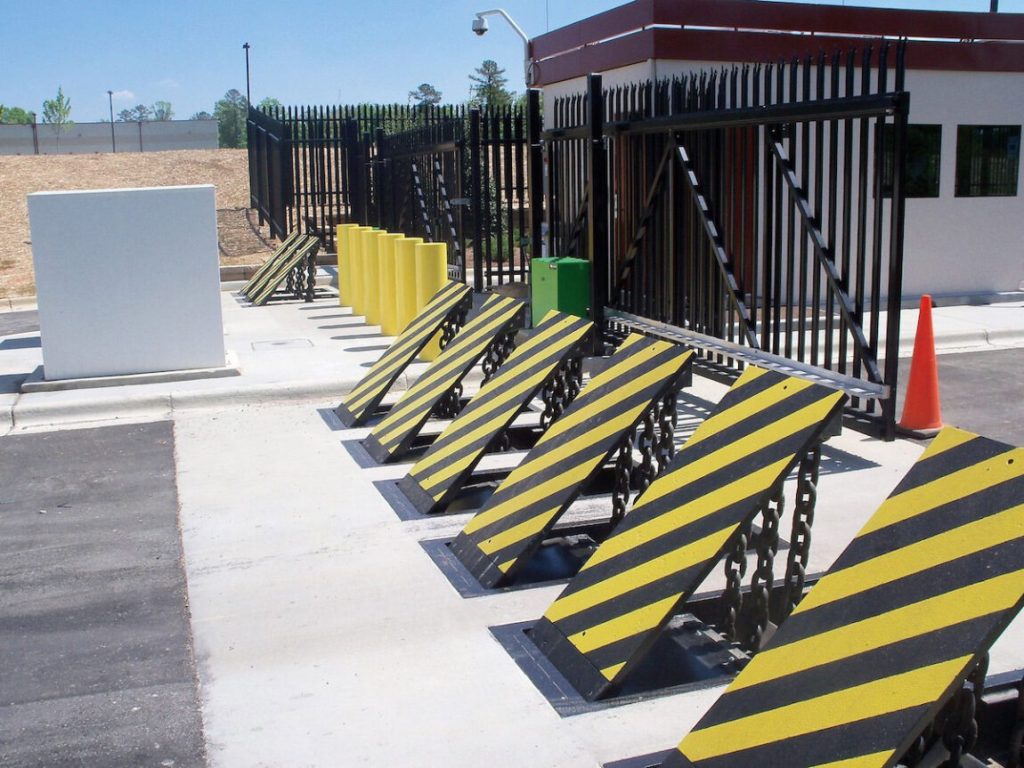
For many crash-rated barrier projects, the civil scope is where budgets move the most. Excavation depth, rebar, concrete, trenching, haul-off, traffic control, dewatering, and subgrade surprises all belong in the early estimate. A team that budgets only for the barrier unit will usually understate the real project cost.
This is also where shallow-foundation systems can change the math. Delta’s DSC550 shallow foundation barricade uses a 24-inch foundation, and Delta positions it specifically for sites where buried utilities, pipes, or other subsurface conflicts make deeper excavation difficult. That does not make shallow systems the automatic answer, but it does show why form factor and site conditions belong in the budget conversation from day one.
3. Utilities, Drainage, and Relocations
Utilities are one of the most common reasons a barrier project grows after schematic budgeting. Electric power, communications, drain lines, irrigation, fire protection, and unknown legacy services can all sit in the exact place a barrier needs to go. At active campuses, airports, data centers, and government sites, even small utility conflicts can trigger redesign, phasing, or night work.
This is why CISA continues to frame hostile vehicle mitigation as a site-specific problem, not a one-size-fits-all product decision. Its vehicle incident prevention and mitigation guidance emphasizes that every site and gathering is different. Budgeting should reflect that reality.
4. Controls, Safety Devices, and Integration
Active barriers need more than steel in the roadway. Controls, operator stations, loop detectors, safety sensors, signal lights, EFO logic, card readers, intercoms, network integration, and backup power can materially affect the budget. This is especially true for retractable bollards, wedges, and beam barricades in high-throughput entry lanes.
Delta’s barrier control systems page is a good reminder that the access-control scope often spans hydraulic or electric operators, control logic, and security integration. If the barrier is part of a broader guard booth, gate, or credentialing workflow, that should be in the estimate early, not left for change orders.
5. Paving, Site Restoration, and Traffic Handling

Barrier projects rarely end at the edge of the equipment. Expect line items for saw cutting, asphalt or concrete restoration, striping, curbs, fencing tie-ins, signage, temporary detours, and lane closures. On occupied sites, traffic handling and phasing can become a major cost driver because the installation has to happen without shutting down operations.
This matters in capital planning because a barrier that looks efficient on paper may still be the wrong choice if it creates too much disruption for the site’s daily traffic pattern or construction window.
6. Commissioning, Training, and Long-Term Maintenance
A complete budget should carry startup and life-cycle costs, not just installed cost. Commissioning, testing, operator training, preventive maintenance, spare parts, and post-installation support all affect the total ownership picture. That is especially important for active systems with moving components and control packages.
Delta maintains a dedicated product support organization for post-installation service. That is a useful reminder for owners: the budget should include what it takes to keep the barrier dependable after turnover, not only what it takes to get it accepted on day one.
Where Value Engineering Helps, and Where It Can Backfire
Value engineering is not the problem by itself. In many projects, it is the process that keeps a solution buildable. The issue is when value engineering strips away the exact performance requirement the site needs.
There are smart ways to lower capital cost. You can simplify controls where throughput is limited. You can choose a shallow-foundation solution where utilities make deep excavation expensive. You can use portable barriers where permanent civil work is hard to justify. You can phase a project so the highest-risk approaches are secured first.
What should raise concern is value engineering that removes the crash rating, weakens the penetration requirement, or substitutes a lower-performing system for a high-consequence site without revisiting the threat and approach conditions. A broad, fast approach to a federal facility, utility, or data center is not the same problem as a low-speed urban frontage road with traffic calming. The wrong downgrade can save money in the bid and create risk for decades.
A Simple Way To Frame the Budget Early
For early capital planning, separate the estimate into three layers.
- Layer 1: The barrier system itself, including the tested product, operating equipment, and safety accessories.
- Layer 2: The site work around it, including excavation, concrete, paving, utilities, drainage, and restoration.
- Layer 3: The operating life of the system, including commissioning, training, maintenance, spares, and support.
That framework keeps teams from treating a crash-rated barrier like a commodity line item. It also makes design reviews more productive because everyone can see where the budget pressure is really coming from.
How We Usually Advise Teams To Budget
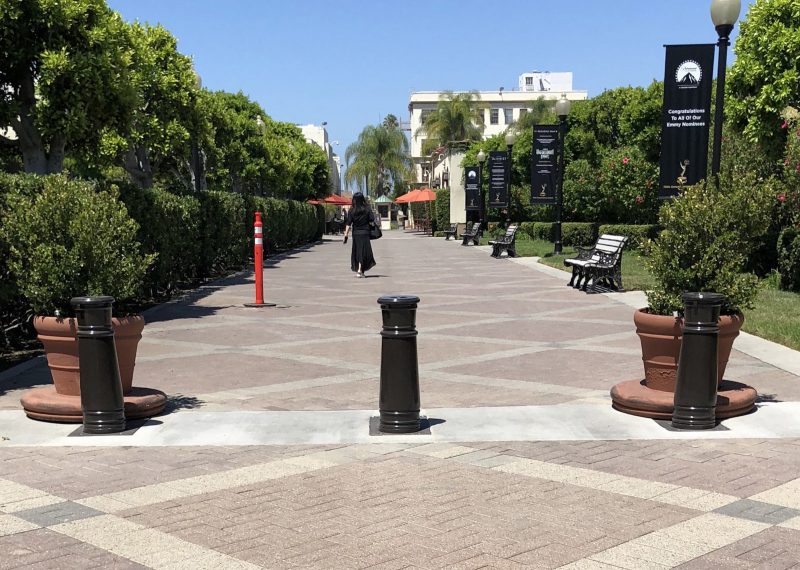
At Delta, we usually advise teams to match the budget to the lane type and consequence of failure. Fixed bollard lines are often the cleanest answer for protected pedestrian edges and stand-off zones. Retractable bollards, wedges, and beam systems fit active lanes where authorized vehicles still need access. Portable and rapid-deployment systems are useful where the barrier line changes or permanent work is not practical.
The point is not to begin with a favorite product. It is to begin with the entry point, the threat path, the operations plan, and the site constraints. From there, the right blend of crash-certified vehicle barricade systems becomes much easier to budget realistically.
Next Steps
If you are trying to budget for crash-rated barriers in a capital project, do not stop at the equipment line. Carry the full scope: foundations, utilities, controls, civil work, commissioning, and life-cycle support. That is how owners avoid false savings and align the budget with the real performance need.
For help scoping a barrier system that fits your site, request a quote or contact Delta Scientific to review approach conditions, utility constraints, and the right crash-rated options for each entry point.
Recent Posts





Frequently Asked Questions
Delta Scientific
Delta Scientific Corporation is the world’s leading manufacturer of vehicle access control equipment. Delta Scientific has been engineering and manufacturing vehicle access control equipment and selling its products worldwide since 1974.