
ASTM F2656 Explained: How M-Ratings Work for Vehicle Barriers

Article Summary
ASTM F2656 is the standard many teams reference when they specify crash-rated vehicle barriers, but the letter and number codes can be easy to misread. This guide breaks down what M-ratings and P-ratings actually mean, how older K-ratings relate, and what to document so your spec is clear.
If you have ever seen a barrier described as “M50/P1” and wondered whether that means “50 mph” or “50,000 pounds,” you are not alone. Crash ratings are shorthand. They work only when everyone reads the same code the same way.
ASTM F2656 describes a test method for crash testing vehicle security barriers, including a range of impact conditions, rating designations, and penetration performance levels. In parallel, the U.S. Department of State SD-STD-02.01 system (K4, K8, K12) is still used in conversations and older documents. The DoD Anti-Ram Vehicle Barriers list includes clear examples of both systems and how penetration is defined.
DoD Anti-Ram Vehicle Barriers List (September 2022)
What ASTM F2656 Is Testing, In Plain English
ASTM F2656 is about controlled crash testing. A test vehicle impacts a barrier at a defined speed and angle, and the test records whether the vehicle is stopped and how far it travels beyond the barrier line. The rating code captures the impact conditions and the penetration outcome. It is performance shorthand, not a design spec by itself.
In most day-to-day specifications, you will see two key parts:
How To Read An ASTM F2656 Rating Code
A common format is “M50/P1.” Here is what that means when the “M” vehicle class is used.
Common “M” vehicle designations used in specs (example ratings):
|
Designation |
Test vehicle |
Impact speed |
Kinetic energy (example) |
|
M30 |
15,000 lb medium-duty truck |
30 mph |
450,000 ft-lbs |
|
M40 |
15,000 lb medium-duty truck |
40 mph |
800,000 ft-lbs |
|
M50 |
15,000 lb medium-duty truck |
50 mph |
1,250,000 ft-lbs |
ASTM F2656 includes other vehicle classes beyond “M.” For example, the DoD list also shows full-size sedan (FS) examples at 30, 40, 50, and 60 mph. That is why it is important to document the vehicle class, not only the speed number.
Penetration ratings (P-ratings) used in ASTM F2656 (example definitions):
|
P-rating |
Penetration distance (feet) |
Penetration distance (meters) |
|
P1 |
Less than 3.3 ft |
Less than 1 m |
|
P2 |
3.31 ft to 23.0 ft |
1 m to 7 m |
|
P3 |
23.1 ft to 98.4 ft |
7 m to 30 m |
Penetration is not “how far the vehicle rolls after the crash” in a general sense. It is measured against a reference point defined by the test standard. That reference point matters when you compare older and newer test reports.
M30 vs M40 vs M50, What Changes and What Does Not
The simple way to think about M-ratings is that the speed changes, which changes the impact energy. The vehicle class stays the same in the “M” designations.
M30 is often discussed for:
M50 is typically discussed for:
M40 is often discussed for:
The important point: the M-rating is not the whole story. P-rating and site geometry are what translate a rating into real-world outcomes.
The P-Rating Is Often The Part Teams Miss
It is common to see a spec that says “M50 barrier” without stating the penetration level. That is incomplete. Two products can both be “M50” but have different penetration outcomes.
A practical way to avoid confusion is to document three things together:
One Detail That Can Change Your Interpretation
Not all F2656-era test reports are directly comparable. The DoD notes that older test standards and SD-STD-02.01 reports measured penetration from the trailing edge of the barrier, while ASTM F2656-19 and later measure from the leading edge of the impacted barrier element. The DoD also notes that the older P4 penetration rating has been removed from ASTM F2656 in subsequent versions.
If you are comparing products, make sure you are comparing like-for-like: same vehicle class, same speed, same penetration definition, and the same reference point for measurement.
How K-Ratings Relate to ASTM M-Ratings
K-ratings come from the Department of State SD-STD-02.01 crash test standard. They are still used as shorthand in many RFPs and legacy site documentation. In the SD-STD-02.01 system, K4, K8, and K12 reference a 15,000 lb truck at 30 mph, 40 mph, and 50 mph.
Common shorthand equivalencies you will see in practice:
|
Legacy K-rating (DoS) |
Impact condition (example) |
Common ASTM shorthand |
|
K4 |
15,000 lb truck at 30 mph |
M30 |
|
K8 |
15,000 lb truck at 40 mph |
M40 |
|
K12 |
15,000 lb truck at 50 mph |
M50 |
Two cautions for spec writers. First, K-ratings often show up without a penetration statement because SD-STD-02.01 required 3.3 ft or less penetration as of the 2003 revision. Second, when someone says “K12,” ask which test report and which standard version is behind that claim.
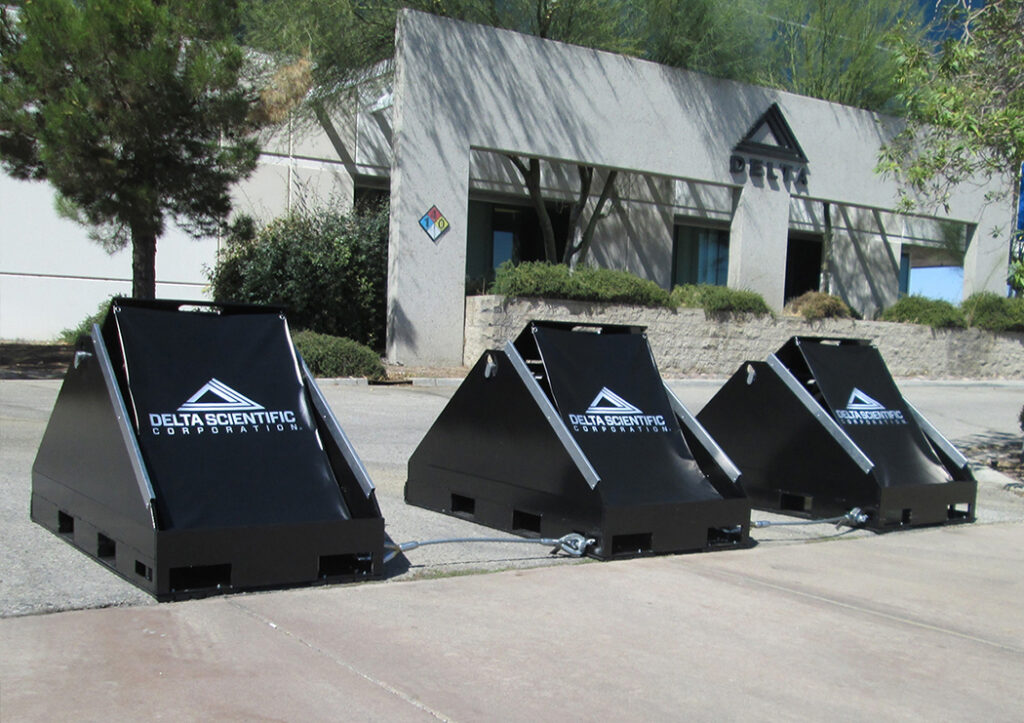
How Delta Uses M-Ratings in Bollards and Wedge Barricades
Delta’s crash-rated product families span bollards and in-ground wedge barricades. If you want a quick way to see how Delta organizes offerings by rating range, start here:
A few specific examples that show how the code appears on real product pages:
This is the practical link between standards and product selection. Once you know how to read the code, you can line up a barrier type, foundation strategy, and rating target that matches your approach conditions and operational needs.
A Simple Checklist Before You Write the Spec
This checklist is intended to keep specifications clear and comparable across vendors and products.
Conclusion and Next Step
ASTM F2656 ratings are useful because they compress a lot of test information into a short code. The risk is assuming that the code is self-explanatory. M ratings tell you the vehicle class and speed. P ratings tell you penetration. Both matter, and the standard version matters when you compare reports.
If you want help translating a threat approach and site geometry into a clear barrier specification, Delta can review your requirements and recommend tested options. You can request a quote or contact the Delta team.
Recent Posts




Frequently Asked Questions
Delta Scientific
Delta Scientific Corporation is the world’s leading manufacturer of vehicle access control equipment. Delta Scientific has been engineering and manufacturing vehicle access control equipment and selling its products worldwide since 1974.