
Have Drones Made Vehicle Barriers Obsolete?
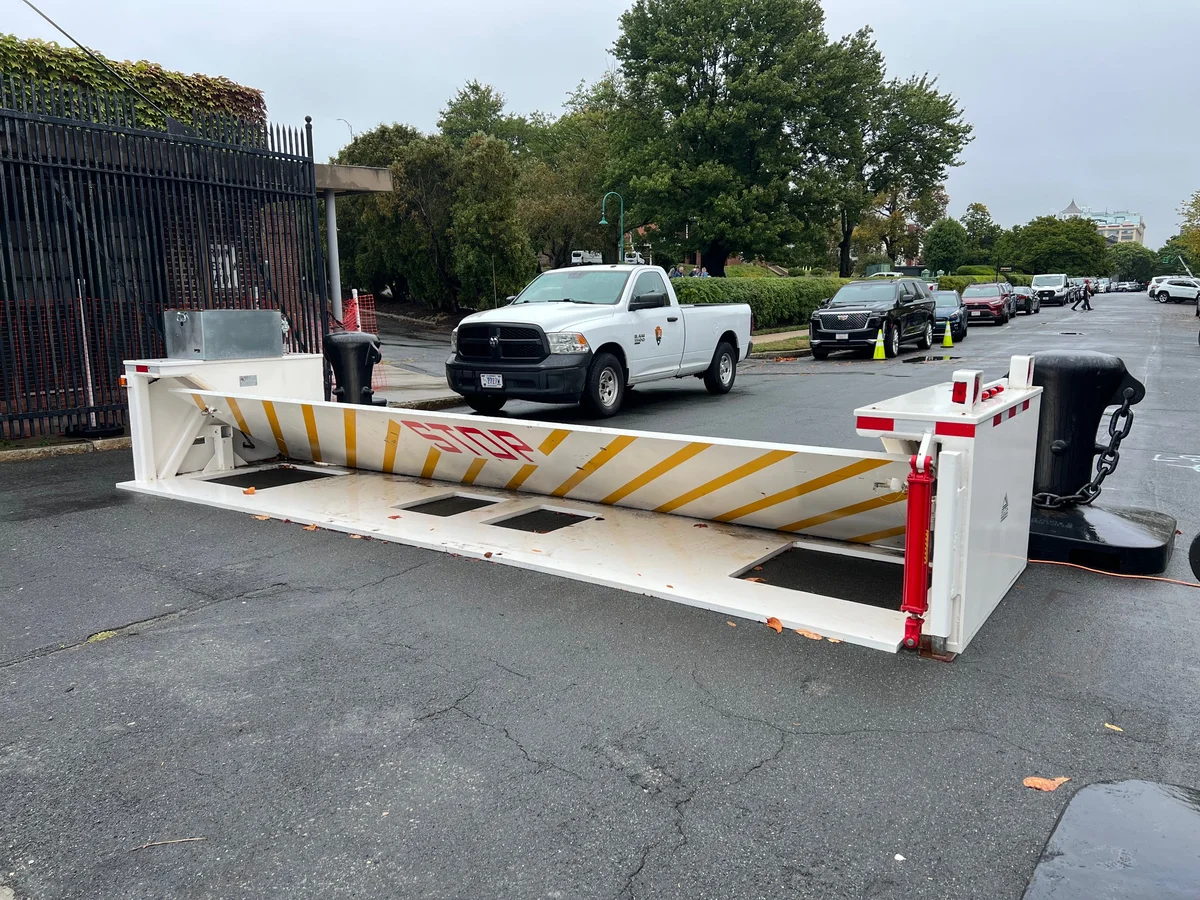
Some recent comments on one of our flagship product videos caught my attention.
The commenters joked that fiber-optic drones have changed everything and suggested that vehicle barriers may no longer matter.
I understand the point they are making, and yes, drones are changing the security conversation. Anyone responsible for protecting a site today needs to take that seriously.
But every time a new threat emerges, there is a tendency to assume the previous threat has gone away. It doesn’t work that way. In the 90s and early 2000s, many people believed cyber threats would become the dominant security concern. They were right. But what didn’t happen was the disappearance of physical threats. Organizations simply had another threat to manage.
After 9/11, government resources were directed toward preventing aircraft-based attacks. But at the same time, Delta Scientific personally saw the need for vehicle barriers increase at a rapid pace. The focus on security broadened, not narrowed.
The fact is, vehicles remain one of the most accessible and destructive threats a facility can face. There is a reason for that. Cars and trucks are everywhere. They require no special training to operate. They can carry significant force, significant payload, and significant consequences. Those facts don’t change simply because new technologies exist.
Recent security reporting continues to show vehicle attacks occurring around the world. Government agencies and industry groups have tracked hundreds of intentional vehicle-related incidents over the past two decades. The numbers vary by study, but the pattern is clear. Vehicle threats aren’t going anywhere.
There is another point that often gets overlooked. Vehicle barriers are not only about terrorism.
In many installations, terrorism is only one part of the risk assessment. Barriers also protect against drunk drivers, distracted drivers, driver error, medical emergencies, unauthorized vehicles, confused visitors, and delivery trucks that end up where they should not be.
A barrier does not care why a vehicle is not stopping. It does not stop to determine the driver’s intent, It simply has to do its job. That matters because the damage can look the same whether the driver meant to cause harm or made a mistake. A vehicle traveling at speed can injure people, destroy equipment, shut down operations, and create liability in a matter of seconds.
Accidental and non-targeted vehicle incidents occur far more often than deliberate attacks. That is why many organizations think about vehicle mitigation as part of basic site safety, not only as a counterterrorism measure.
A corporate campus wants to protect employees walking near an entrance. A utility wants to keep vehicles away from critical equipment. A data center wants to control access to sensitive infrastructure. A city wants to protect pedestrians at a public event. A manufacturing site wants to prevent an unauthorized truck from entering the wrong area. These are everyday concerns.
Another commenter made a fair point: a barrier is only as good as the wall, fence, or perimeter around it.
I agree with that.
No serious security professional believes one product secures an entire facility. A barrier is one layer. Fencing is another. Access control is another. Surveillance, lighting, procedures, guard force, standoff distance, and drone detection all play their part.
Good security is layered. It is built around credible risks, site conditions, and the consequences of failure.
A drone may fly over a fence. A truck cannot. A drone may create one type of risk. A vehicle creates another. The right question is not which threat matters more. The right question is whether the site is prepared for both.
The facilities we protect today face a broader threat environment than they did twenty years ago. Cyber threats have grown. Drone threats have grown. Vehicle threats and unauthorized access remain.
As an industry, we should be careful about declaring any threat obsolete just because a newer one is getting more attention. The newest risk does not erase the old ones. It adds another layer to the planning process.
The people responsible for protecting critical assets do not get to defend against only the most talked-about threat of the moment. They have to think about what can actually happen at their site, from the intentional attack to the ordinary mistake that becomes a serious event.
Drones have changed the conversation, but they haven’t changed basic physics. The need for vehicle mitigation is as important today as it was decades ago.
Recent Posts



Keith Bobrosky
Keith Bobrosky is President of Delta Scientific. A former applications engineer, he writes and speaks to the practical side of vehicle security, connecting crash ratings and standards to what works on real sites.